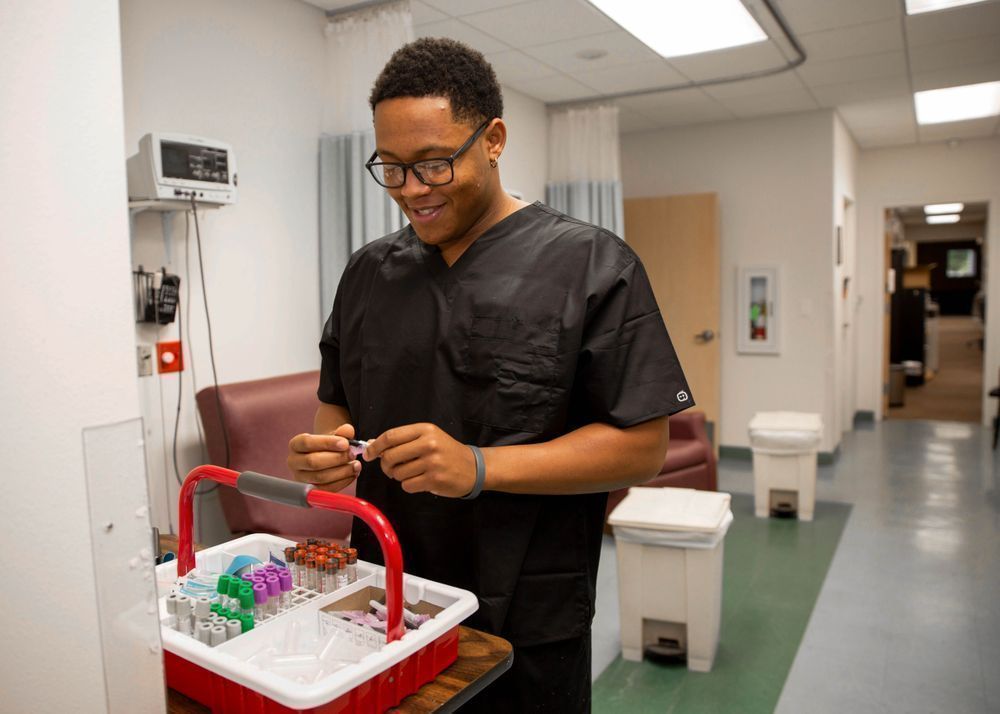
Phlebotomy — the skill of drawing blood from patients — is one of the most in-demand clinical competencies for medical assistants. Practices that hire medical assistants consistently rank phlebotomy proficiency as a top requirement, and MAs who can draw blood confidently and efficiently are more valuable, more versatile, and more employable.
Why Phlebotomy Matters for Medical Assistants
Blood draws happen in virtually every outpatient practice. Primary care, internal medicine, OB-GYN, endocrinology, oncology — all rely on laboratory results to diagnose and manage patient conditions. A medical assistant who can perform phlebotomy eliminates the need for a separate phlebotomist, which saves the practice money and improves patient flow.
Employers want MAs who can draw blood because:
- It reduces staffing costs (one MA vs. an MA plus a phlebotomist)
- It improves patient experience (fewer handoffs, shorter wait times)
- It increases practice efficiency (blood draws happen during the visit, not as a separate appointment)
What Phlebotomy Training Covers
Venipuncture technique
The core skill: inserting a needle into a vein, collecting the right amount of blood in the correct tubes, and removing the needle safely. Training covers:
- Vein identification and palpation
- Tourniquet application and timing
- Needle insertion angle and technique
- Tube order of draw (critical for accurate lab results)
- Needle removal, gauze application, and site management
Specimen handling
Drawing the blood is only half the job. Proper handling ensures accurate results:
- Correct tube labeling (patient name, date, time, collector)
- Specimen processing and centrifugation when required
- Temperature requirements for different specimen types
- Chain of custody documentation
Patient management
Not every blood draw is straightforward. Training prepares you for:
- Anxious patients who need reassurance and distraction techniques
- Patients prone to fainting (vasovagal response)
- Difficult veins — dehydrated patients, elderly patients, patients with small or deep veins
- Pediatric blood draws (when applicable)
Safety and infection control
- Proper PPE (gloves, face protection when indicated)
- Sharps disposal and needlestick prevention
- Bloodborne pathogen exposure protocols
- Hand hygiene between patients
How Phlebotomy Skills Affect Your Career
Hiring advantage: Medical assistant job postings that list “phlebotomy” as a required skill represent the majority of available positions. MAs who can’t draw blood are immediately less competitive.
Pay impact: MAs with strong phlebotomy skills — especially those with a separate phlebotomy certification — can earn $1–$2/hour more in some markets.
Versatility: Phlebotomy-trained MAs can work in a wider range of settings, including specialty clinics and outpatient labs that require blood draw capabilities.
Get Phlebotomy Training
Quality medical assistant programs include phlebotomy as a core component of the curriculum — not an optional add-on. Zollege medical assistant programs cover phlebotomy technique throughout the 16–18 week training period, with hands-on practice in real clinical settings. Find a program near you.