Medical assistant school prepares you for one of the fastest-growing careers in healthcare — with 14% projected job growth through 2032 (BLS) and a median salary of $42,000/year. But the quality of the school you choose directly determines your readiness for the job, the certification exam, and your first day in a clinical setting.
Here’s how to choose the right program.
What Medical Assistant School Covers
O*NET identifies 40+ tasks that medical assistants perform. A quality program covers all of them across two domains:
Clinical: Vital signs, phlebotomy, injections (IM, SubQ, intradermal), EKG, point-of-care testing, infection control, wound care, specimen collection, patient preparation
Administrative: EHR documentation, scheduling, insurance verification, billing, HIPAA compliance, medical terminology, anatomy, pharmacology basics
Program Types Compared
| Type | Duration | Cost | Student Loans? |
|---|---|---|---|
| Accelerated vocational | 16–18 weeks | $2,000–$5,000 | No (payment plans) |
| Community college certificate | 9–12 months | $5,000–$15,000 | Sometimes |
| Associate degree | 18–24 months | $10,000–$25,000+ | Often |
What Makes a Program Worth Choosing
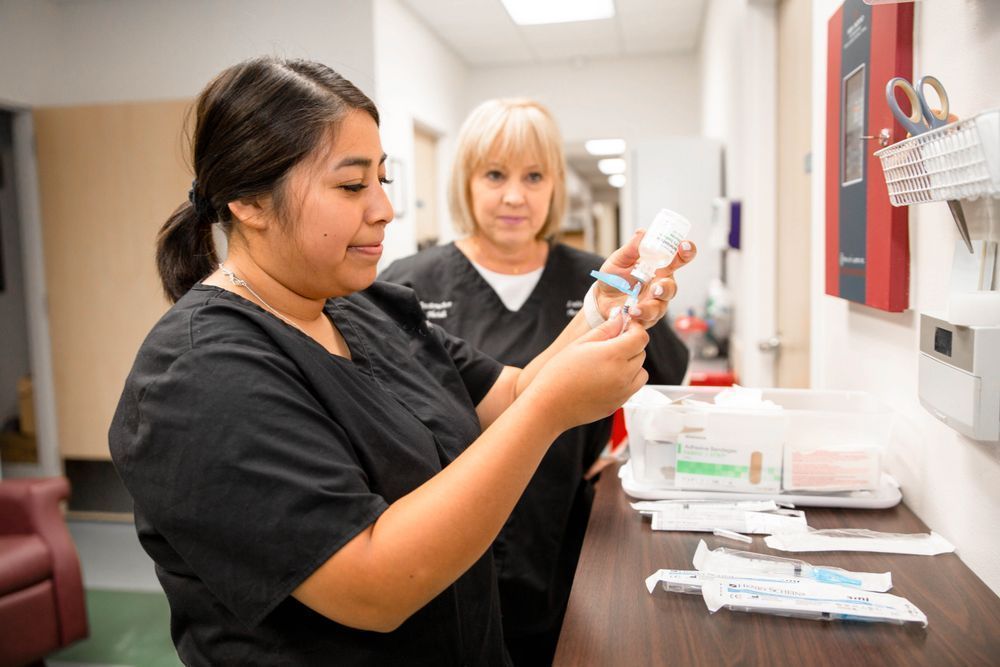
Training in real medical offices — not just classrooms. You practice phlebotomy, injections, and EKGs on real equipment in real clinical environments.
CCMA exam prep built in — the Certified Clinical Medical Assistant credential is what employers want. Programs that integrate it throughout the curriculum produce the best outcomes.
Externship included — supervised clinical experience in a local practice. This is where training becomes experience and where professional connections are made.
No student debt — payment plans that let you pay as you go. For a $2,000–$5,000 program, loans create unnecessary burden.
WIOA eligibility — many programs qualify for workforce-funded training. Check CareerOneStop.org.
Career Data
- Median salary: $42,000/year
- Job growth: 14% through 2032 (Bright Outlook per O*NET)
- CCMA premium: $2,000–$6,000/year
- Settings: Primary care, specialty clinics, urgent care, hospital outpatient, FQHCs
Find a Program
Zollege medical assistant schools operate at over 200 locations nationwide — 16–18 weeks, hands-on training, CCMA prep included. Find a location near you.