
Medical assistant classes online make training accessible for people who can’t sit in a classroom five days a week — working adults, parents, caregivers, and anyone whose schedule doesn’t fit a traditional school day. But medical assisting is a hands-on clinical profession, and that creates a tension: the knowledge can be taught online, but the physical skills can’t.
The best programs resolve this by combining online classes with in-person clinical practice. Here’s how to find that balance.
What Works Well Online
These components of medical assistant training translate effectively to a virtual format:
Medical terminology — the vocabulary of healthcare. Every chart note, lab order, and provider conversation uses this language. Online instruction with flashcards, quizzes, and repetition works well.
Anatomy and physiology — understanding how the body works and why clinical procedures target specific systems. Visual aids, interactive diagrams, and recorded lectures are effective.
Pharmacology basics — medication classes, routes of administration, safety protocols, and common side effects. Knowledge-based content that fits the online format.
Administrative procedures — scheduling, insurance verification, billing concepts, EHR navigation, and HIPAA compliance. These are computer-based skills that translate naturally to online instruction.
Infection control theory — OSHA regulations, sterilization science, and PPE standards. Understanding the “why” before practicing the “how.”
CCMA exam preparation — content review, practice questions, and test-taking strategies. Exam prep is inherently study-based and works well online.
What Requires Hands-On Practice
These skills need physical repetition, tactile feedback, and instructor supervision:
Phlebotomy — venipuncture requires feeling the resistance of the vein, managing the needle angle, and handling patients who are anxious or prone to fainting. You can’t learn this from a screen.
Injections — intramuscular, subcutaneous, and intradermal technique each require different angles, depths, and muscle memory. Watching a video isn’t the same as holding a syringe.
EKG lead placement — positioning electrodes correctly on a real person’s body. Placement precision determines result quality, and this requires hands-on practice.
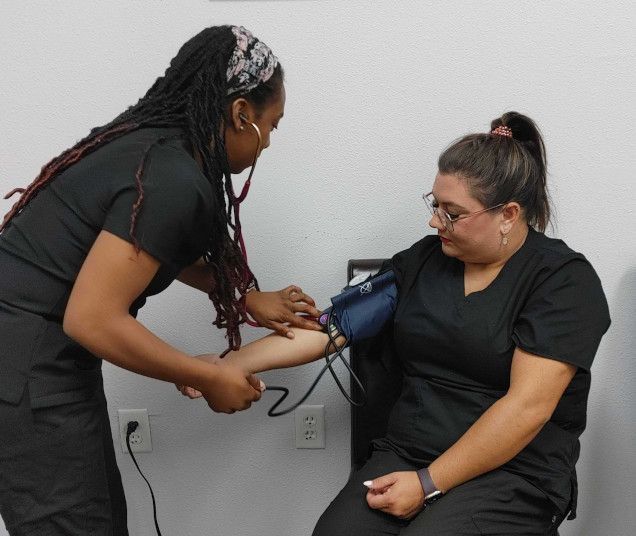
Vital signs — auscultating blood pressure, palpating a pulse, using a pulse oximeter correctly. These are physical assessment skills.
Sterile technique — gloving, gowning, instrument handling. Knowing the steps isn’t the same as performing them correctly under time pressure.
Patient interaction — managing anxious patients, communicating clearly, maintaining professionalism. Real-world practice builds this faster than role-playing on a screen.
The Hybrid Model: Best of Both Worlds
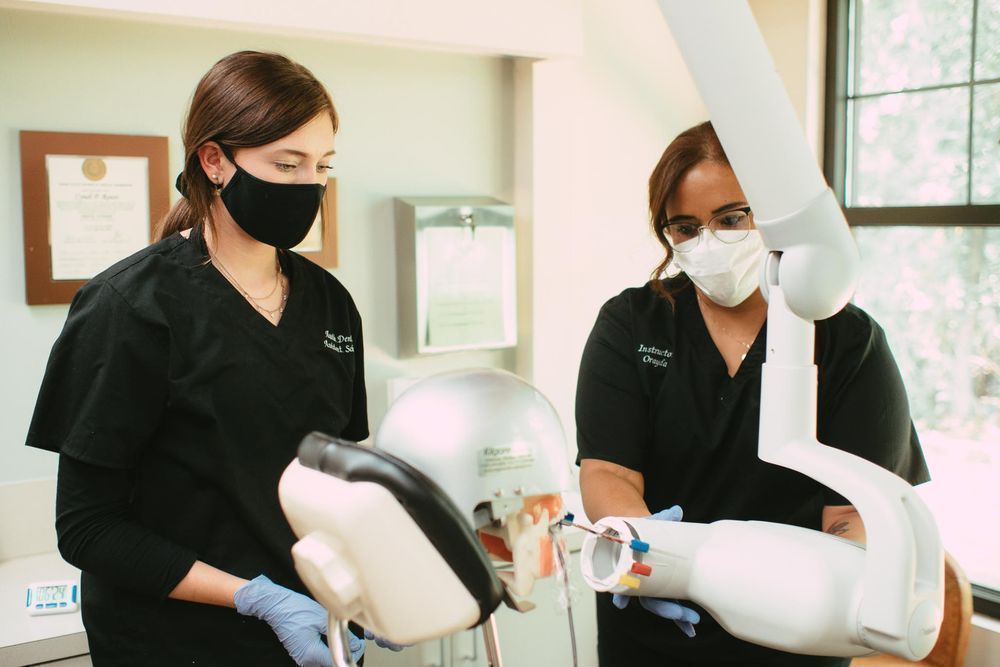
The strongest online medical assistant programs aren’t fully online — they’re hybrid:
- Online classes for knowledge-based content (the majority of your weekly schedule)
- In-person lab sessions for clinical skills practice (intensive, scheduled sessions)
- Externship in a local medical office for supervised patient care
This structure gives you the scheduling flexibility of online learning without the clinical skills gap that fully online programs create.
What Employers Think
Employers value the CCMA certification — not the delivery method. A certified medical assistant who trained through a hybrid program is evaluated the same as one who trained entirely in person. The exam is the equalizer.
But employers also notice clinical confidence in interviews. Candidates who’ve practiced phlebotomy, injections, and EKGs on real equipment describe their skills with precision and specificity. That confidence — built through hands-on practice — affects hiring decisions.
Questions to Ask Before Enrolling
- Does the program include in-person clinical training? If not, understand the gap you’ll have.
- What certification does it prepare you for? Look for CCMA (NHA), CMA (AAMA), or RMA (AMT).
- Are classes live or self-paced? Live, instructor-led sessions provide structure and accountability.
- Is an externship included? Supervised clinical experience in a real medical office is non-negotiable.
- What’s the total cost? Transparent pricing with payment plans and no student loans.
Career Data
- Median salary: $42,000/year (BLS)
- Job growth: 14% through 2032
- Certification premium: $2,000–$6,000/year more for CCMA-certified MAs
Find Online + Hands-On Training
Zollege offers medical assistant programs at over 200 locations with flexible scheduling, hands-on clinical training, and CCMA certification prep. Find a program near you.