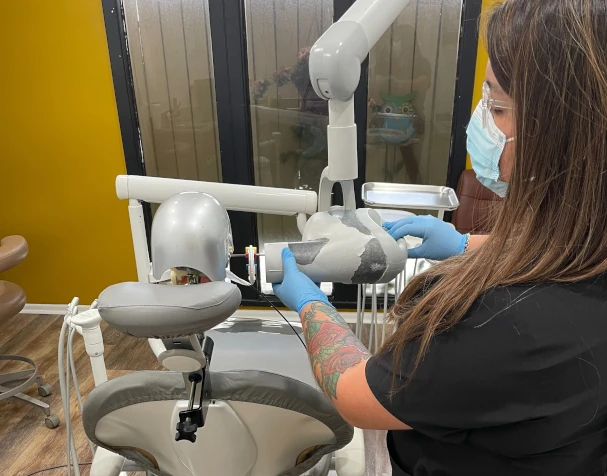
An expanded functions dental assistant (EFDA) is a dental assistant with additional training and certification to perform clinical tasks beyond the standard scope — such as placing restorations, applying sealants, taking final impressions, and polishing teeth. The expanded designation means you can do more for patients, contribute more to the practice, and earn more money.
What Expanded Functions Include
Specific expanded functions vary by state, but commonly include:
- Placing, carving, and finishing amalgam and composite restorations
- Applying pit and fissure sealants
- Taking final impressions for crowns and bridges
- Placing and removing temporary restorations
- Applying fluoride treatments
- Coronal polishing
- Placing and removing retraction cord
- Cement removal and suture removal
These are tasks that would otherwise require the dentist’s time — so EFDA-certified assistants directly increase the productivity and revenue of the practice.
How EFDA Affects Your Pay
Expanded functions dental assistants typically earn $2–$5/hour more than standard dental assistants. On a national level:
- Standard DA median: $46,540/year ($22.38/hr)
- EFDA median: $50,000–$58,000/year ($24–$28/hr)
- Annual premium: $4,000–$12,000
The premium reflects the additional value you bring to the practice. An EFDA who can place restorations frees the dentist to see more patients — which directly generates revenue.
How to Become an EFDA
Requirements vary by state but generally include:
- Current dental assistant certification or registration
- Completion of an approved expanded functions training course
- Passing a written and/or clinical exam
- State board application and approval
Some states build expanded functions into their standard dental assistant certification. Others require separate training and examination.
Is EFDA Worth It?
The math is clear: additional training (typically a few weeks to a few months) that results in $4,000–$12,000/year in additional income pays for itself almost immediately. EFDA certification also makes you more competitive for lead positions and specialty practice roles.
Start With Your Foundation
Before pursuing expanded functions, you need solid dental assistant training. Zollege offers programs at over 200 locations — 10–12 weeks, hands-on, with RDA certification preparation. Find a program near you.