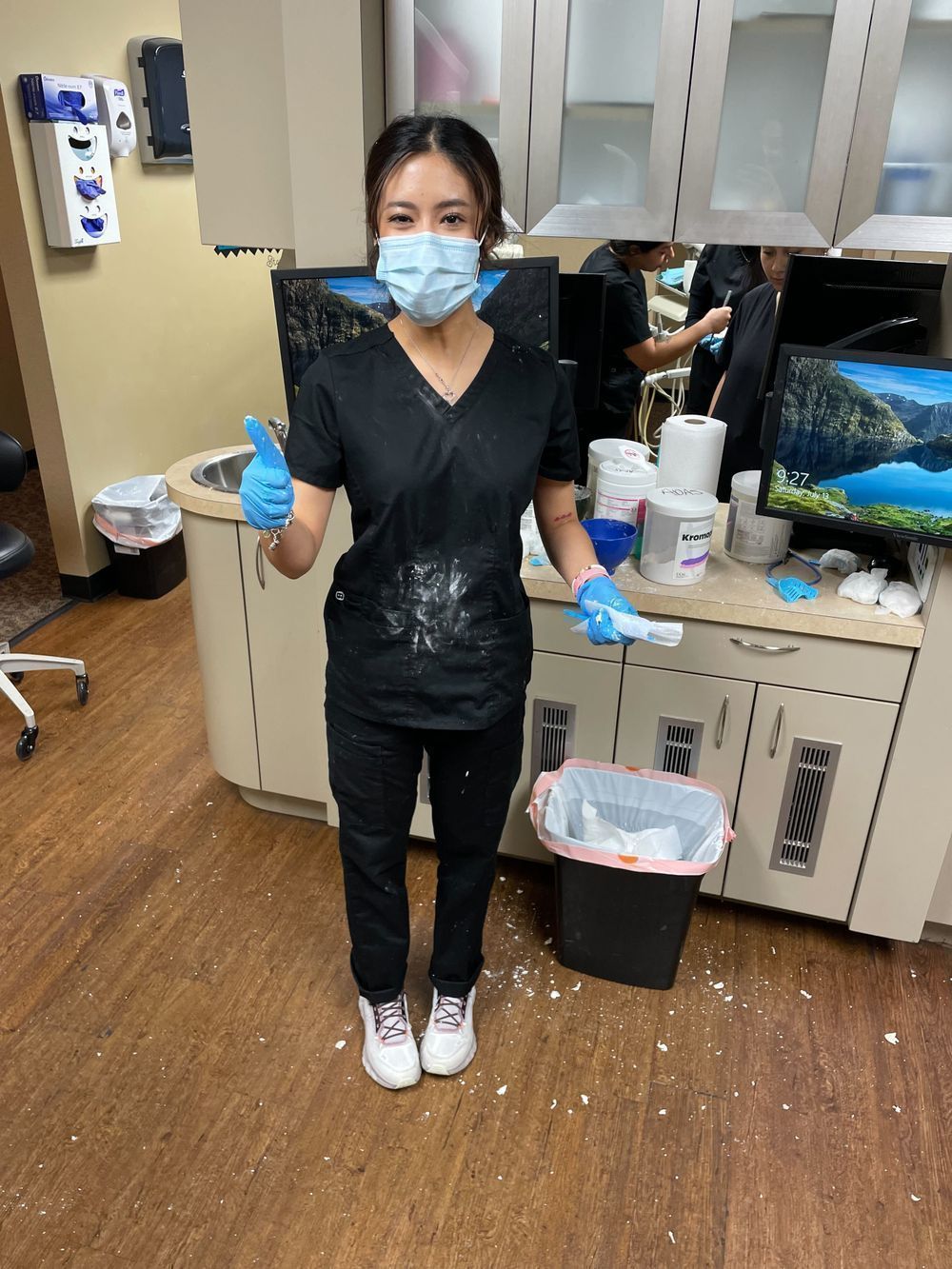
The job title says “assistant,” but the role is anything but passive. Dental assistants are active participants in every procedure, responsible for keeping the operatory running, the instruments sterile, the patients comfortable, and the schedule on track. The range of duties is wider than most people expect.
Here’s a detailed look at what dental assistants actually do — broken into clinical, administrative, and professional responsibilities.
Clinical Duties
Chairside Assisting
The core of the job. During every procedure — from routine cleanings to complex extractions — the dental assistant works directly alongside the dentist:
- Instrument passing: Anticipating which instrument the dentist needs next and placing it in their hand without being asked. Good assistants develop a rhythm with their dentist that makes procedures faster and smoother.
- Suction and retraction: Managing the high-volume evacuator (suction) to keep the field clear and dry, while retracting the cheek, tongue, or lip so the dentist has visibility.
- Four-handed dentistry: The coordination between dentist and assistant that allows procedures to move efficiently. This is a specific technique that requires training and practice.
- Procedure setup and breakdown: Preparing the operatory before each patient (instruments, materials, barriers) and breaking it down after (disposing of waste, sterilizing instruments, disinfecting surfaces).
Dental Radiography
Taking X-rays is one of the most frequent tasks:
- Positioning patients and the X-ray sensor or film correctly
- Operating digital and conventional radiography equipment
- Ensuring proper radiation safety for the patient and staff
- Processing and evaluating images for quality before the dentist reviews them
Infection Control and Sterilization
This is non-negotiable and takes a significant portion of the day:
- Cleaning and sterilizing instruments using ultrasonic cleaners and autoclaves
- Monitoring sterilization equipment with biological and chemical indicators
- Maintaining operatory disinfection between patients
- Following OSHA bloodborne pathogen and hazard communication standards
- Proper handling and disposal of sharps and biohazardous waste
Dental Materials
Dental assistants prepare and handle the materials used in procedures:
- Mixing dental cements, composites, and bonding agents
- Loading and seating impression trays
- Fabricating temporary crowns and restorations
- Pouring dental models from impressions
Patient Care
- Taking and recording vital signs when required
- Providing pre-operative and post-operative instructions
- Applying topical anesthetic before injections
- Managing anxious patients with calm, clear communication
- Answering patient questions about procedures, aftercare, and scheduling
Administrative Duties
Depending on the office size, dental assistants handle varying amounts of front-office work:
- Scheduling: Managing the appointment book, confirming appointments, handling cancellations and reschedules
- Patient records: Updating medical histories, entering treatment notes, maintaining charts
- Insurance: Verifying coverage, submitting claims, explaining benefits to patients
- Inventory: Tracking supplies, placing orders, managing vendor relationships
- Phone and front desk: Answering calls, greeting patients, handling walk-ins
In smaller practices, the dental assistant may be the only support staff — handling everything from chairside assisting to answering the phone.
What Makes the Job Rewarding
Dental assistants consistently cite variety as the top reason they love the work. No two days are identical. You might assist with a routine cleaning, help during an emergency extraction, take a full set of radiographs, calm a nervous child, and process an insurance claim — all before lunch.
The work is tangible and immediate. You can see the results of procedures, watch patients leave with healthier smiles, and know that your skills made a direct difference in someone’s experience.
Career Outlook
The Bureau of Labor Statistics reports a median salary of approximately $46,540/year for dental assistants, with 7% projected job growth through 2033. Certification (RDA) and specialty experience can push salaries well above $50,000.
Start Your Dental Assisting Career
Zollege offers dental assistant training at over 200 locations nationwide. Programs run 10–12 weeks with hands-on training in real dental offices, RDA certification preparation, and flexible scheduling for working adults. Find a program near you.