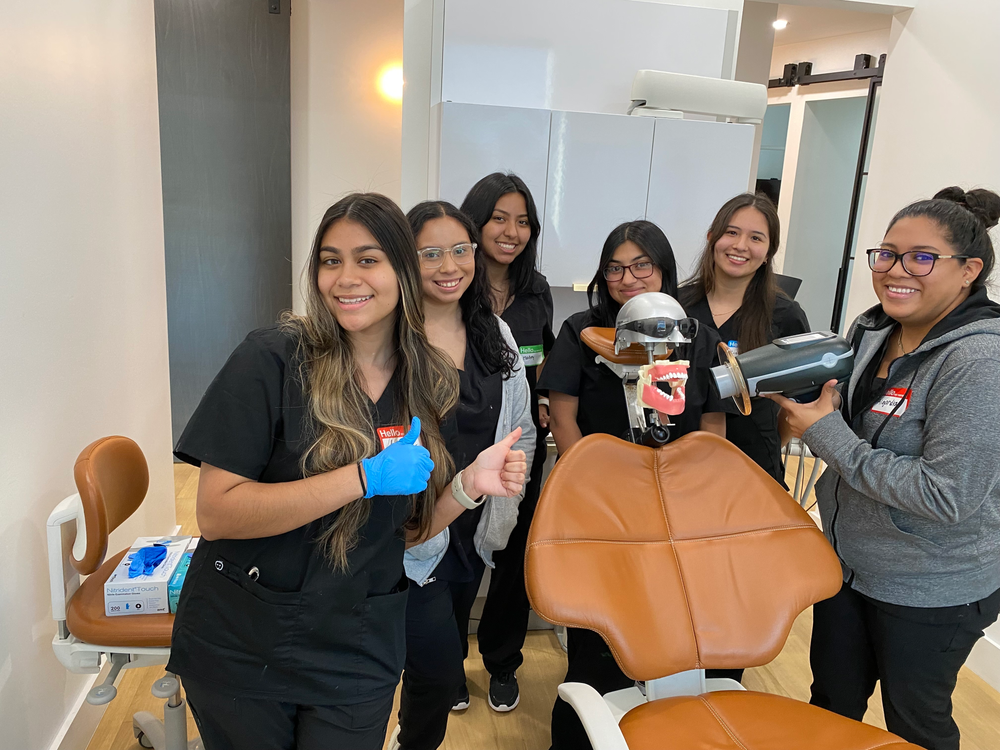
Dental assistant classes come in several formats — from 10-week accelerated programs to 2-year associate degrees — and the right choice depends on your goals, timeline, and budget. The clinical content is remarkably similar across all formats. The difference is how much time you spend on coursework unrelated to dental assisting.
Here’s the complete comparison.
Class Format Comparison
Accelerated vocational classes (10–12 weeks)
Structure: All dental assisting, all the time. Evenings and weekends, inside real dental offices. Cost: $2,000–$5,000 Certification prep: RDA exam content throughout Best for: Career changers, working adults, parents, anyone who wants to start working fast
Community college certificate (9–12 months)
Structure: Dental assisting curriculum plus some general education courses. Campus-based, primarily weekday daytime. Cost: $5,000–$15,000 Certification prep: Varies by program Best for: Students who prefer a campus environment and longer timeline
Associate degree (18–24 months)
Structure: Dental assisting plus significant general education (English, math, psychology, etc.). Cost: $10,000–$25,000+ Certification prep: Usually included Best for: Students who want an academic credential or plan to transfer into dental hygiene
What Every Format Covers
Regardless of class format, the dental assisting content is consistent:
Clinical skills (identified by O*NET as core competencies):
- Chairside assisting and four-handed dentistry
- Dental radiography — positioning, exposure, safety, digital systems
- Sterilization and infection control — autoclaving, OSHA compliance
- Dental materials — impressions, cements, composites, temporaries
- Patient communication — intake, anxiety management, aftercare
Administrative skills:
- Scheduling, dental charting, insurance verification
- Practice management software (Dentrix, Eaglesoft, Open Dental)
- Supply inventory and ordering
Certification preparation:
- RDA exam content (clinical and knowledge domains)
- Practice exams and review
The Time-to-Income Calculation
| Path | Time to Employment | First-Year Earnings | Training Cost | Net Position at Year 1 |
|---|---|---|---|---|
| 10-week program | ~3 months | ~$42,000 | $3,500 | +$38,500 |
| 12-month certificate | ~14 months | ~$20,000 (partial year) | $10,000 | +$10,000 |
| 2-year degree | ~26 months | $0 (still in school) | $20,000 | -$20,000 |
The 10-week graduate is ahead by $28,000–$58,000 at the one-year mark compared to longer programs.
How to Choose
Choose accelerated classes if: You want to start earning quickly, avoid student debt, and focus exclusively on dental assisting skills.
Choose a certificate program if: You prefer a campus setting, don’t mind a longer timeline, and want slightly more academic depth.
Choose an associate degree if: You specifically need a degree credential, plan to transfer into dental hygiene school, or prefer a traditional academic environment.
WIOA Funding
Many dental assistant programs qualify for WIOA (Workforce Innovation and Opportunity Act) funding. Eligible students may receive workforce-funded training. Check CareerOneStop.org.
Find Dental Assistant Classes
Zollege offers dental assistant classes at over 200 locations nationwide — 10–12 weeks, hands-on training in real dental offices, RDA prep included. Find a location near you.